Daniel Tucker
and
Elizabeth Mansfield
Born: 10 April 1575, Minton, Gravesend, Kent, UK
Died: 10 Feb 1625, Port Royal, Bermuda
Buried:
Born:
Died:
Buried:
Married:
Children: Daniel1, Henry, Alice1
Daniel was the tenth of twelve children of a wealthy Devonshire merchant and land owner, who had moved to Gravesend Kent. Nothing is known of his marriage other than the name of his wife, but he apparently married and had at least 3 children prior to the beginnings of his adventures in 1606. Given that he was a merchant, and that Kentish merchants (like Jeremiah Clarke and Nathaniel Polhill) often moved to London, it is possible that they were married and lived there. There is no evidence of wife or children with him later in his life. Elizabeth may or may not have died early, but the children certainly remained in England until they were grown.
Daniel and his oldest brother George were early investors in the Virginia Company. Daniel bought 3 shares for 37 pounds, a larger than average investment (George bought 2 shares). In. August1606 Daniel departed England on the Richard, as part of an expedition funded by Ferdinando Gorges and George Popham to start a colony in “North Virginia”, i.e Maine. Daniel went as “factor”, i.e. merchant, in charge of a cargo apparently intended for trade2. They sailed to the Caribbean via the Canary Islands. There they traded with local Indians on St. Lucia, rescued a Dominican Friar who had been kidnapped by Indians on Dominica, and took on stores (and dropped off the Friar) on Puerto Rico. They then headed up the Florida coast, where they were attacked by a fleet of 12 Spanish merchant ships. The ship and crew were captured by the Spanish, and the crew sent back to Spain on five of the Spanish ships. Most ended up in Spanish prisons3, but Daniel’s ship was blown off course and ended up in Bordeaux, where he was set free by the French. He sued his captors in the local courts for damages, but the suit was eventually dismissed on a technicality. Meanwhile, he wrote to Ferdinando Gorges about the incident4, the news of which caused a minor diplomatic crisis with the Spanish.
It appears that Daniel did make it to Maine the following year, as part of the expedition led by Capt. Christopher Newport. However, the settlement, Fort St George, was abandoned in 1608, and most occupants, including Daniel, moved to the other colony of the Virginia Company, Jamestown. In Jamestown Daniel, now Captain Tucker, occupied a number of administrative positions, including “truck master” (Indian trader), “provost master”, and member of the council. He was “cape merchant” (treasurer) during the 1610 “starving time”, when mismanagement by the then Governor, George Percy, led to widespread starvation.5 Daniel organized and rationed the remaining food supplies, and constructed a boat which the residents could use to catch fish. Percy writes that “Capt: Tucker by his industry and care caused the same [food supply] to howlde outt four monthes….[He] by his greate industry and paines buylded A Large Boate wth his owne hands The wich was some helpe and A little Reliefe unto us And did kepe us from killinge one of Another.” Despite Daniel’s best efforts, the survivors decided that Jamestown had to be abandoned. They were sailing down river to leave when they met the fleet of Lord De La Warre, which had come to resupply them.
Probably because of his role is saving the colonists during the Starving Time, Daniel was appointed Governor of Bermuda in 1616. It was clear that Bermuda needed a strong hand to bring order to the chaotic situation there. When the previous Governor Moore left in 1615, he appointed six men to govern the island. Three of the six took to a boat and left for the Caribbean to become pirates. The remaining three6 immediately set about squandering all of the colony’s resources and drinking all of the alcohol. The planting of crops was neglected, and food supplies were running short.
Daniel soon put a stop to this. He declared martial law, organized the colonists into an efficient work force, summoned by the beating of a drum at dawn and working (with a break at noon) until sunset. They cleared land, planted trees, felled timbers, and repaired the forts built by the previous Governor. He sent a boat to the Caribbean, which returned with a wide variety of plant to add to the crops being grown on Bermuda. He experimented with whaling, with, however, limited success. Under Tucker, tobacco became a significant cash crop for the island. He had the island surveyed and subdivided, so that each of the islanders could have their own plot of land, which led to a rapid improvement in housing and agriculture, as the colonists now had their own property to develop. He introduced coin currency onto the island, the Bermuda Hog Penny7 (actually multiple denominations) which were the first coins in use in British North America.
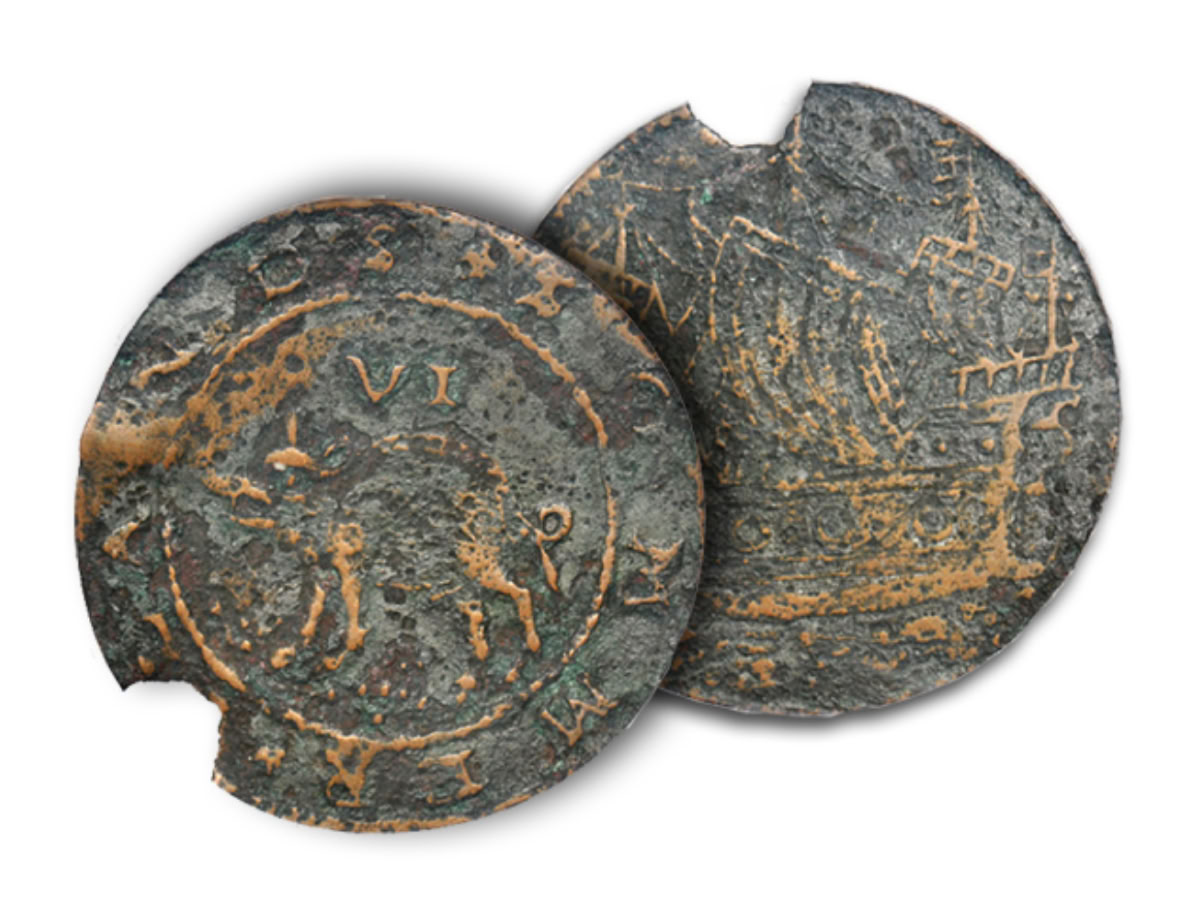
The Bermuda Hog Penny, showing a hog on the front and a sailing ship on the back. They were only used for a few years, and are now extremely rare and valuable.
For all of this, Daniel was uniformly hated by the islanders. He was more than a hard taskmaster, he was a tyrant. He worked the colonists ceaselessly, and tolerated no departures from strict discipline. Hangings were frequent, often for petty offenses. His moods were violent and unpredictable; islanders learned to avoid him when his hat was set a certain way upon his head- the sign of a bad mood. So bad were things that there were multiple escape attempts, in which islanders risked death at sea in a small boat (the nearest land was almost 1000 miles away) rather than remaining under his rule. His final offense was appropriating for himself one of the best pieces of land when the island was surveyed and subdivided, after which he commandeered materials and labor to have the islanders build him a grand house. Complaints to the Virginia Company in London about his rule were so loud and frequent that, when his three year term as Governor was at an end in 1619, he immediately set sail for England to forestall his removal.8
But removed he was, despite the best efforts of his brother George, who was now a major investor in the Somers Island (Bermuda) Company, the spinoff of the Virginia Company which now controlled the Island. Attempts were made to find him a job with the East India Company, without success. He was awarded 20 shares of land in Virginia9, as a reward for his five years of services in Virginia. Daniel remained in London for at least a few years, and is recorded as attending many meetings of the Virginia Company in 1621 and 1622, but he may have been in Virginia in 1622, and at some point he returned to Bermuda, where he died in 1625.
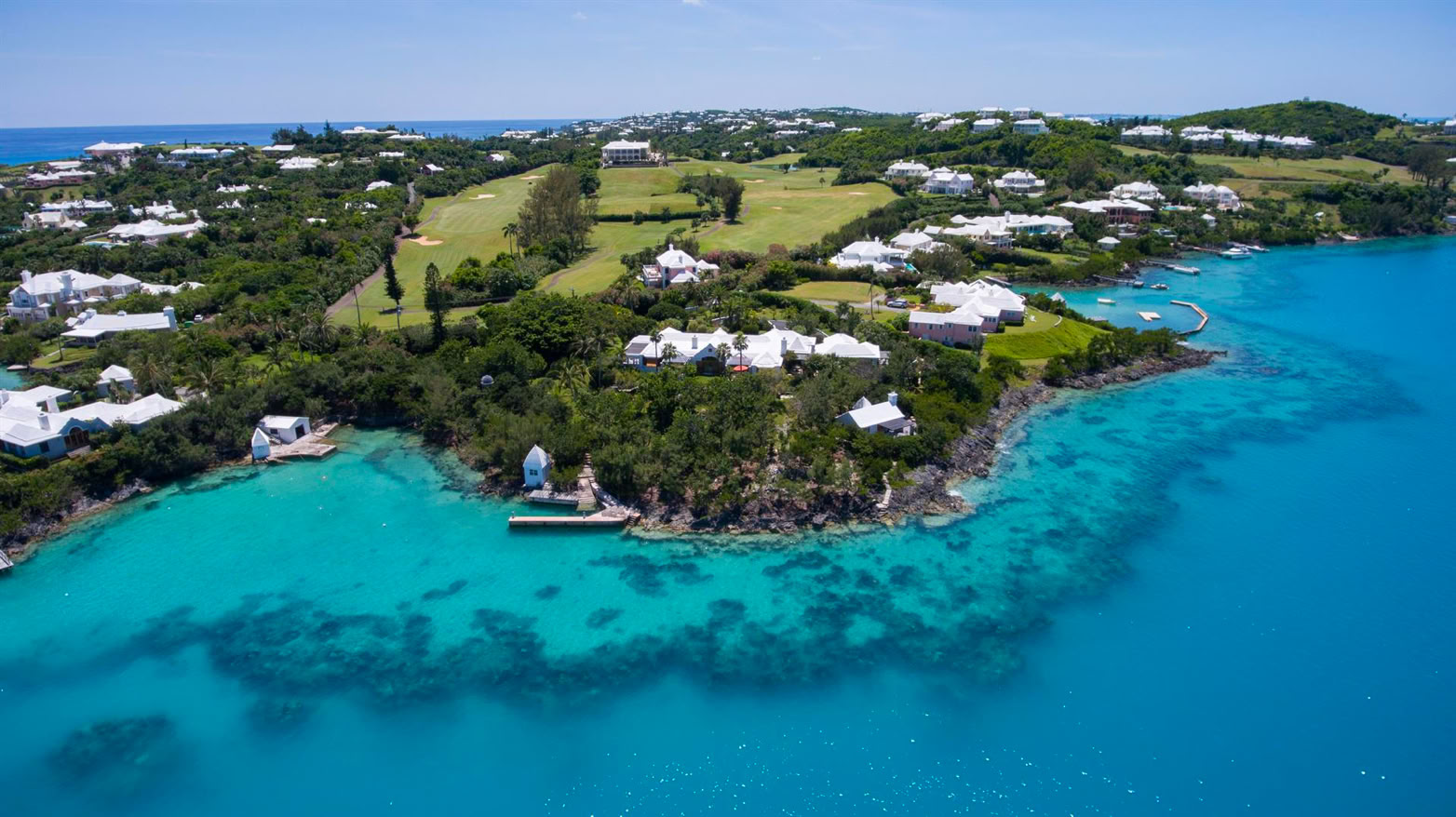
The Settlement of Tucker’s Town, which Daniel founded and named after himself, is now one of the poshest areas of Bermuda
Ancestry of Daniel Tucker10
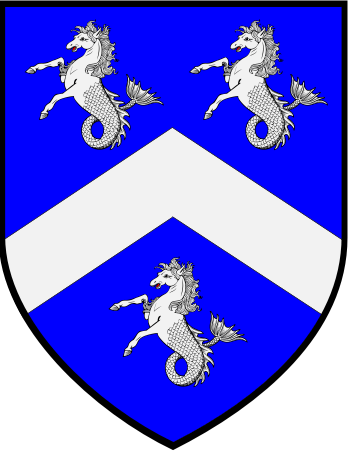
Ashe (1498- ), daughter of William Ashe, all of Throwleigh Devon. William is described as a “merchant-adventurer”. William and Isota had four children, of which George was the oldest.
Daniel is the son of George (1520-1587) and Mary Hunter. Mary was born Maria Jager, daughter of a Ghent, Belgium merchant who moved to London and took on the name of Hunter. George was apparently involved in Sir Thomas Wyatt’s protestant uprising against Queen Mary Tudor, but escaped with his head. When Elizabeth became queen he received some favors from her, including official appointments in Gravesend, and the manor of Wilton, next to Gravesend, which had been the property of Wyatt. Daniel and Mary had twelve children, of which Daniel was the tenth.
George Tucker is the son of William (1495-b1543) and Isota
_______________________________
1 It is unproved but very probable that Alice and Daniel were children of Daniel and Elizabeth. Documents prove that Daniel Jr and Alice were siblings, and that Henry was one of several sons of Daniel senior. Although he died in Bermuda, Henry was in Virginia in the 1630’s, presumably to look after property left him by his father, and Daniel was there as well, probably for the same reason. Given the very strong propensity of English families to name the first son after the father, Daniel Jr. is probably the eldest son. Daniel senior’s brother George also had sons named Daniel and Henry, (but no daughter Alice). Daniel Tucker is a surprisingly uncommon name; only 5 are recorded in English parish records between 1550 and 1700 (none, alas, our Daniels).
2 The Sadahoc Colony, by Henry Thayer, 1892.
3 The Voyage of Master Henri Challons … by John Stoneman, pilot, in Hakluytus Postumus, Vol XIX
4 Letter from Daniel Tucker to Fernandino Gorges, in Sir Ferdinando Gorges and His Province of Maine, Vol 3, p 129
5 After eating every other living thing, the surviving residents of Jamestown started eating each other. One man was condemned for killing his pregnant wife and salting her flesh for food.
6 One of them, John Mansfield, is reported to be a cousin of Daniel’s wife, Elizabeth
7 Wild hogs were a plentiful source of food on Bermuda from the first arrival of the English, probably arriving on a Portuguese of Spanish shipwreck.
8 There are a number of contemporaneous accounts of Daniel’s time on Bermuda, including John Smith’s General Historie of Virginia, New England, and the Somer Isles, and Samuel Purchase, in Hakluytus Postumus, Vol XIX. A recent, very readable history of early Bermuda is In the Eye of All Trade, by Micheal Jarvis (William and Mary PhD Thesis, 1998)
9 When added to the 3 shares of stock in the Virginia Company which he had originally purchased, this gave Daniel a total of 23 shares, equal to 1150 acres of land
10 For Tucker genealogy, see The Descendants of William Tucker of Throwleigh Devon by Robert Tennard Tucker