William Dungen
and
Frances Latham
Born: c 1600
Died: Sep 1636, London, England
Buried: St Martin in the Fields, London
Born: Feb 1620 Kemptson, Bedfordshire
Died: Sep 1677, Newport RI
Buried: Common Burial Ground, Newport RI
Married: 27 Aug 1629, St Martin in the Fields, London
Children: Barbara (Barker), William, Frances (Holden), Elizabeth
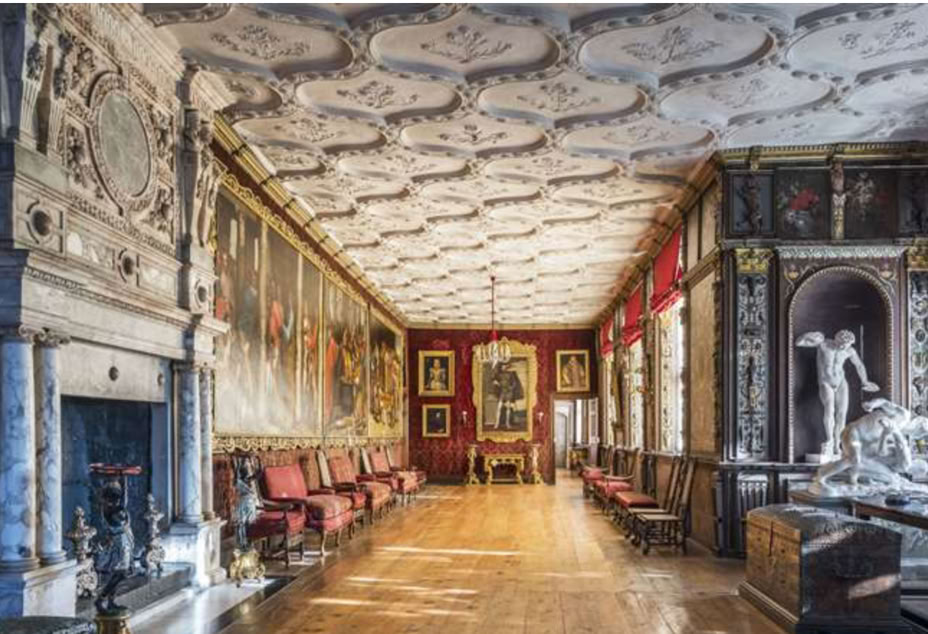
William Dungen was a perfumer, with shops in the fashionable New Exchange on the Strand near Charing Cross. He came from a wealthy and prominent family of Dublin merchants, one of whose menbers- his grandfather Richard- settled in London and became Royal Master Plasterer.1 Richard’s work for Elizabeth I and James I has been lost, but some of his other work does still survive, including the spectacular ceilings in Knole House, in Kent. Coincidence or not, Richard had also done the plasterwork in the New Exchange, when it was constructed by his frequent client Robert Cecil, Earl of Salisbury2. Both Richard and grandson William lived in the neighborhood of the Exchange, in the parish of St Martin in the Fields (which at the time was in the fields, on the outskirts of London.)
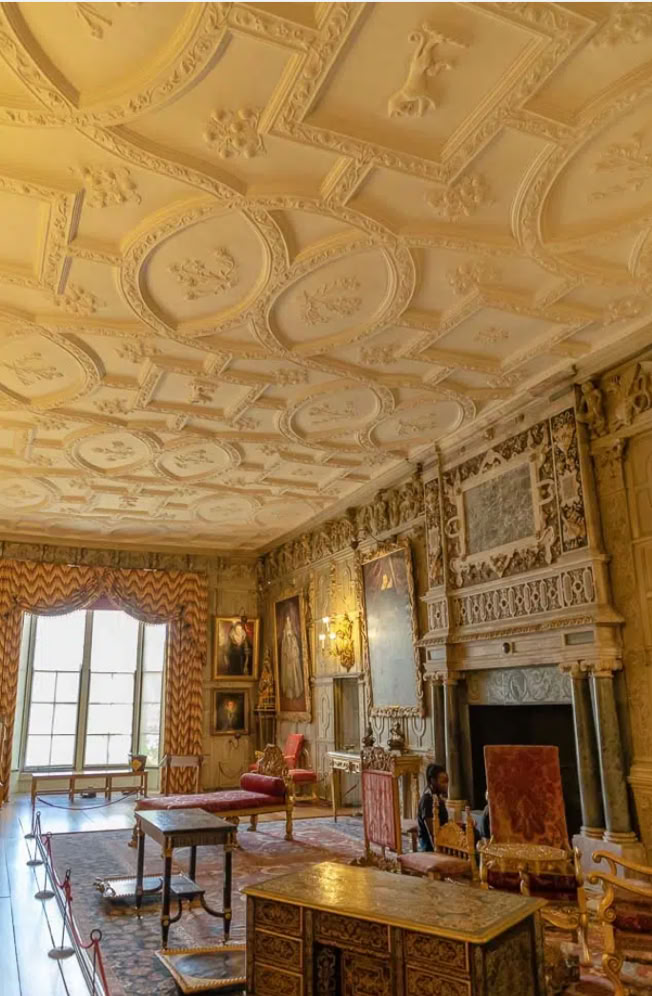
Knole House: Ballroom
Knole House: Cartoon Gallery
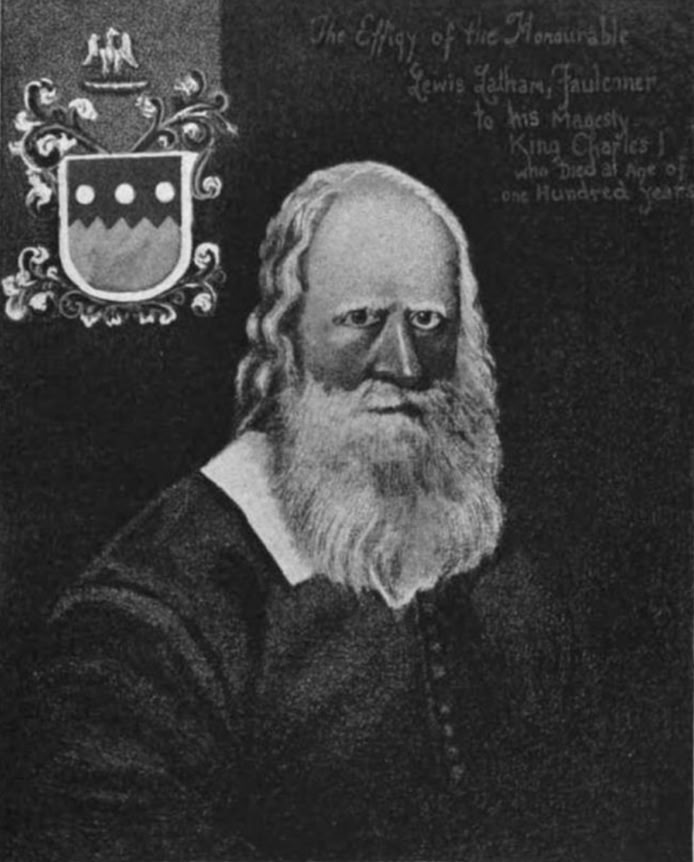
Frances Latham was one of eight children of Lewis Latham, who was Falconer to Henry, Prince of Wales, then to his brother Charles I. In 1627 he was promoted to the position of Sergeant of the Hawks. The portrait of Lewis was allegedly brought to America by his daughter Frances and passed down through the family, If authentic, it suggests that Lewis was a descendant of the Lathams of Lancashire, whose arms are painted in the upper left. With William Dungan she had four children, but he died in 1636, being buried at St Martin-in-the-Fields on 20 September of that year, leaving a will with Frances as executrix, and naming each of his four minor children.[4] Within two years she was remarried, this time to Jeremy Clarke of London. Soon thereafter the couple immigrated to New England with Frances' four young children.
Clarke died in 1652, again leaving Frances a widower with many young children. About a year later her father, Lewis Latham, also died, leaving Frances a small legacy in his will. Within a few years she had married her third husband, the Reverend William Vaughan of Newport. Vaughan, a highly respected citizen of Newport, had been ordained in 1648 as a member of the First Baptist Church of Newport, but in 1656 he and others formed the Second Baptist Church. Frances is known as "the Mother of Governors." She was the ancestor of at least ten governors and three deputy/lieutenant governors, and is related by marriage to an additional six governors and one deputy governor (all but one of Rhode Island).
(adapted from Wikipedia )
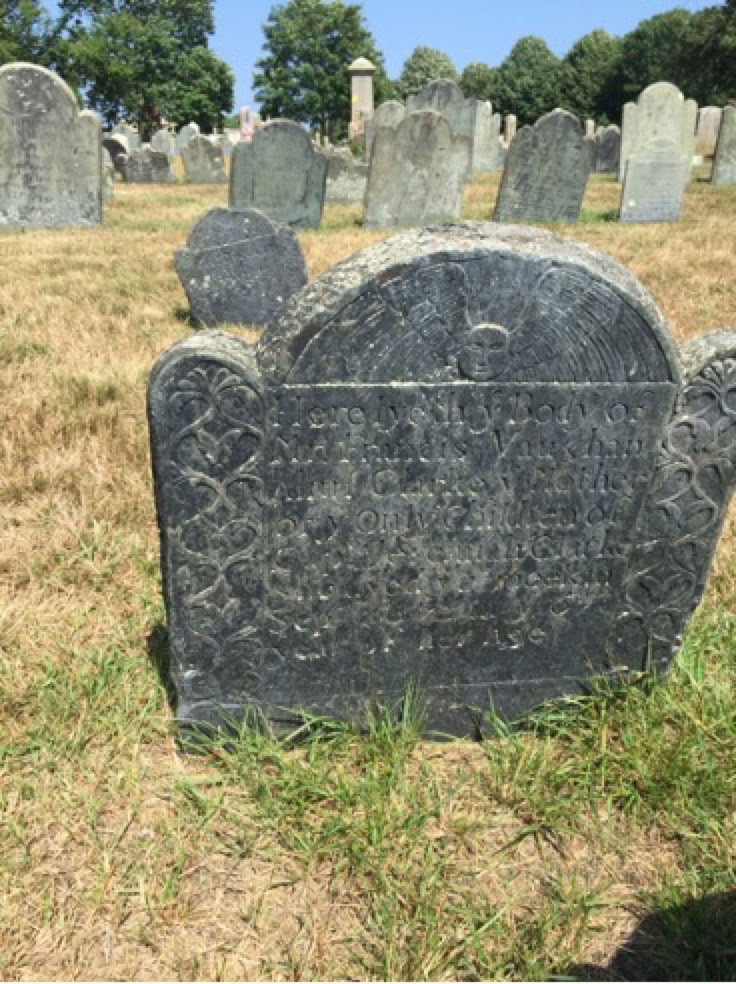
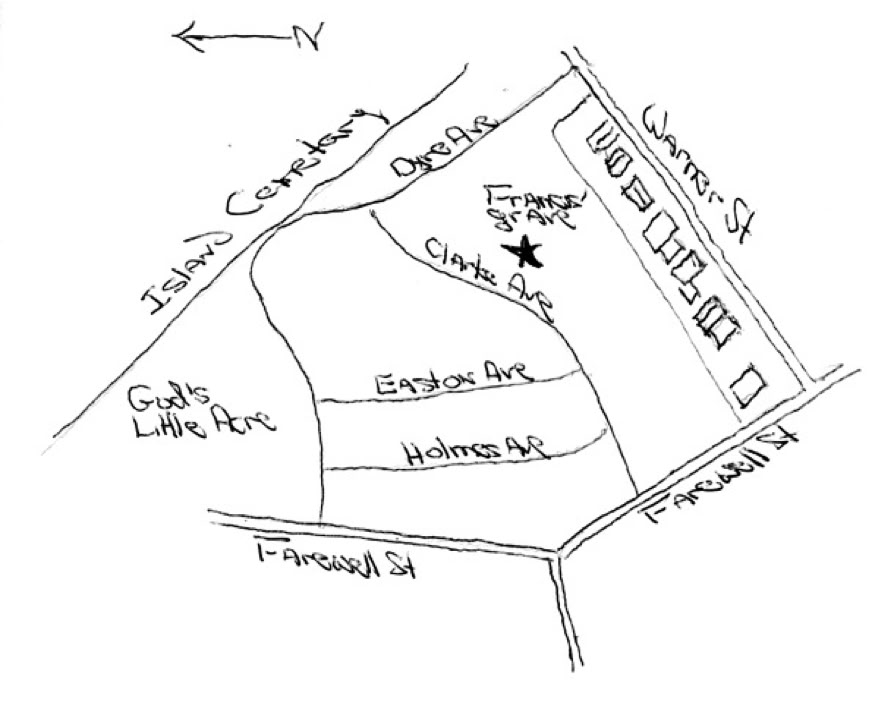
Frances is buried in the Common Burial Ground of Newport.
Jeremiah Clarke
and
Frances Latham
Born: Jan 1605, East Farleigh Kent
Died: Jan 1652, Newport RI
Buried: Newport RI
Born: Feb 1620 Kemptson, Bedfordshire
Died: Sep 1677, Newport RI
Buried: Common Burial Ground, Newport RI
Married: c 1637, England
Children: Walter, Mary (Stanton), Jeremiah, Latham, Weston, James, Sarah (Carr)
Born in central Kent in southeastern England, Jeremiah Clarke was the son of William Clarke and Mary Weston. His maternal grandfather, Sir Jerome Weston, was Baron of the Exchequer, as were his father’s uncle, maternal grandfather, and first cousin. His uncle was Richard Weston, 1st Earl of Portland, Lord High Treasurer of England. Jeremiah was a merchant in London before sailing to New England. While in England he married Frances (Latham) Dungan, and she and her four Dungan children accompanied Clarke to the American colonies. They first settled on Aquidneck Island (called at that time Rhode Island), and Clarke was listed as an inhabitant there in 1638. In April 1639, while living in Portsmouth he was one of nine men who signed a compact, agreeing to establish the town of Newport. In Newport he held a variety of positions from 1639 to 1649, including treasurer, constable, and Assistant (i.e. member of the Governor’s Council), In 1642 he was chosen lieutenant of the military in Newport and in 1644 he became captain.
In 1648 Clarke was Newport's Assistant to the governor, but became President Regent, or acting governor, of the entire colony (four towns) when accusations were made against William Coddington, who had been elected to that position that May. Coddington did not particularly care for the patent that Roger Williams had obtained from the crown in 1644; he much preferred autonomy for the two Rhode Island towns of Portsmouth and Newport, or even their union with the Massachusetts Bay Colony. Also, Coddington was a Royalist, supporting the King, Charles I, while most of the Rhode Island settlers supported the Puritan Party in England. For these, and probably other reasons not made clear in the court records of the day, Coddington was suspended from the office of President to which he had been elected, and Jeremy Clarke became the governor in his place.
On both his father’s and mother’s sides, Jeremiah was descended from most of the important figures in English history up until the War of the Roses. Most of the family were royalists, and many had strong Catholic sympathies. (One cousin, Richard Catesby, was the leader of the Gunpowder Plot- the attempt to assassinate James I, and put a Catholic on the throne.) His uncle, Richard Weston, was one of the most powerful men in England under Charles I. Why, then, did such an established person chose to move to Rhode Island? Clearly, the immediate family had puritan sympathies. A brother and sister emigrated to Massachusetts, another brother went to Connecticut, and another brother came to Rhode Island. There is some evidence that he himself was of nonconformist sympathies. While the Society of Friends had not become established until after his death, his son Walter became a Quaker, and the Friends' records indicate that Jeremy Clarke was buried "by the street by the waterside in Newport", rather than in the Common Burial Ground, as would normally have been expected. His grave is now under a group of commercial buildings on Thames St.
(adapted in part from Wikipedia)
Trivia
Jeremiah and Frances are 5th ggrandparents of Susan B. Anthony
and 8th ggrandparents of Marilyn Monroe
Ancestors of Jeremiah who appear in Shakespeare
- Sir Walter Blunt (Henry IV, Part 1)
- Duncan (Macbeth)
- John Holland, Duke of Exeter (Henry V)
- William the Marshall (King John)
- Ralph Neville, Earl of Westmorland (Henry IV, Parts 1 & 2, Henry V)
- John of Gaunt (Richard II)
- John I (King John)
- Henry III (King John)
- Malcolm (Macbeth)
___________________________________________
1 For more on William’s family see https://www.familysearch.org/library/books/records/item/780033-dunganstown-county-wicklow-and-the-probable-dungan-connection and https://clairegapper.info/gazetteer-of-plasterers-d.html. (The latter incorrectly states that Richard Dungan died without descendants; in fact all of his children pre-deceased him.)
2 And nephew of Margaret Cecil Cave