John Skinner
and
Elizabeth
Born: 1446 Reigate Surrey
Died: 8 Mar 1516, Reigate Surrey
Buried: St Mary Magdalen Church, Reigate
Born:
Died:
Buried:
Married:
Children: Ann (Wyatt), Godlyf (Elliot), John, James, Nicholas, Clara, Elizabeth
John was married twice; according to his will, his first wife was named Elizabeth. After her death, he married the widow of John Asshurst, by means of which he acquired the manors of Hathersham and Fancombe. The Skinner family was of humble origin- a skinner was a producer of animal hides- but by the 14th century had become rather big fish in the small pond of Reigate; Skinners (mostly John Skinners) represented the Borough of Reigate in dozens of parliaments between the 14th and 16th centuries. John’s father is called ‘gentleman’ when he is repeatedly sued for non-payment of debts in the 1460’s and 1470’s. Whether this indicates dishonesty of financial problems is unknown.
By the 15th century the Skinners, had become among the leaders of one of the several powerful political factions in Surrey. At least one Skinner was one of the Surrey Justices of the
Peace for most years of Henry VIII, Eward VI, and Mary’s reigns. The reasons for this prominence are not clear. They did not have a distinguished ancestry, they were not extremely wealthy, and none of them were royal favorites. It is possible this is due to their long dominance in Reigate plus their many family connections. The steadily rising status of the Skinners is shown by the marriage of John’s daughter Anne to Henry Wyatt, an important councillor of Henry VII, and soon to become Knight of the Bath and member of the Privy Council under the young Henry VIII. Henry acted as trustee in a marriage transaction between John and his second wife Agnes. In 1492, 10 years before his marriage to Anne Skinner, Henry had purchased Allington Castle, Kent, about 25 miles from Reigate.
Henry’s son, Sir Thomas Wyatt, also served as trustee in transactions between John Skinner and his second wife. Thomas was a diplomat, politician, and poet, most famous for two things: introducing the sonnet form into English, and almost loosing his head because of an alleged affair with Henry VIII’s queen, Ann Boleyn.1
Thomas’ son, Sir Thomas Wyatt the younger, was executed in 1554 for leading Wyatt’s Rebellion, an attempt to remove the Catholic Mary Tudor from the throne and replace her by Elizabeth. The grandson of Thomas the younger was Sir Francis Wyatt, Governor of Virginia in the 1620’s. No doubt helped by the connection with Henry Wyatt, John Skinner’s son John, and his grandson, yet another John, had increasingly active careers in national politics.
___________________________________
1 Hever Castle, the home of the Boleyns, is about 20 miles from both Reigate and Allington Castle
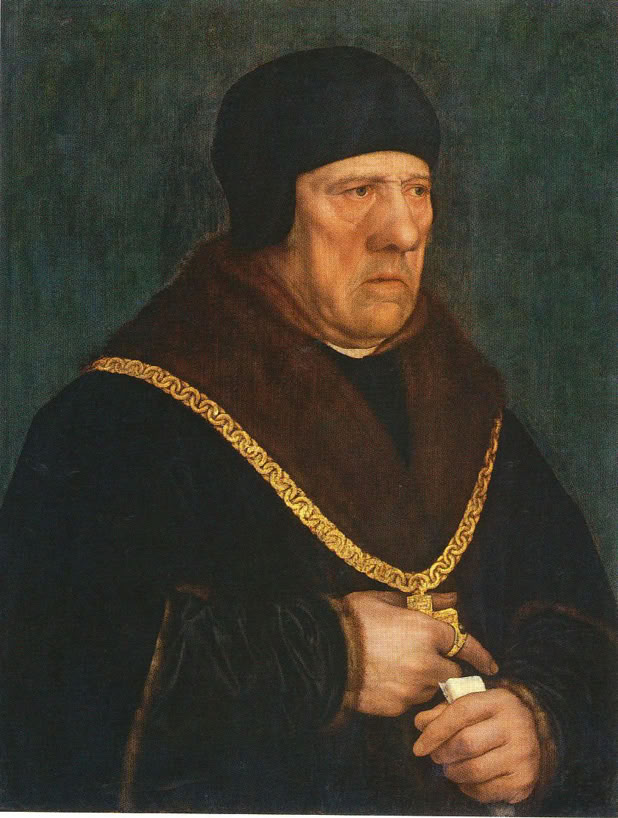
Sir Henry Wyatt, by Hans Holbein the younger